Blog 8 min read
What has happened since Spain regularization 2026 opened
What has happened since Spain regularization 2026 opened: portal, offices, Supreme Court, vulnerability certificate and the first real numbers.
In this article
- April 16 turned the decree into a live procedure
- The Supreme Court did not stop the launch
- The first serious number arrived fast
- The vulnerability certificate stopped looking secondary
- The in-person network now has a concrete shape
- The first week confirmed the pressure
- Politics did not disappear. It moved into operations
- What changes for you today
- The real update
Spain regularization 2026 is no longer in the announcement phase. It is in the friction phase. That is the useful difference between what we knew on April 15 and what we know now.
April 16 turned the decree into a live procedure
That day the online route opened, the appointment system went live, and the Ministry launched its dedicated portal. From that moment the kind of question people were asking changed.
Up to April 15 the conversation was mostly legal: who fits, what the rule says, what became stricter in the final text.
From April 16 onward the conversation became:
- where do I file
- who will receive the file
- which documents are slowing cases down
- and how much volume the system can absorb
That is why reading the decree alone is no longer enough. The real operating rules matter too.
The Supreme Court did not stop the launch
April 16 also brought the first important court update. Spain’s Supreme Court rejected the urgent request to suspend the decree immediately.
That does not erase the wider legal fight around the measure. It means something more concrete: the regularization remained active from the start.
For anyone preparing a file, that detail matters. Right now this is not a rule frozen inside a judicial limbo. It is an open procedure that is still receiving applications.
The first serious number arrived fast
On April 17 the Ministry reported 13,500 online applications in the first full day and more than 19,600 accepted appointments for in-person filing.
That volume said a lot very quickly.
First, demand was real and large.
Second, the strategy of waiting to “see how it goes” started carrying a cost. When a procedure opens at that pace, better prepared files enter with an advantage.
Third, saturation stopped being a theoretical risk. It became an immediate one.
The vulnerability certificate stopped looking secondary
Also on April 17 the Ministry published the vulnerability certificate model. That clarified one point that had been spreading badly in group chats and informal advice.
Not everyone needs that paper.
People need it when they are entering through the specific vulnerability route. They do not need it when they are filing through the work route, family route, or the route linked to international protection.
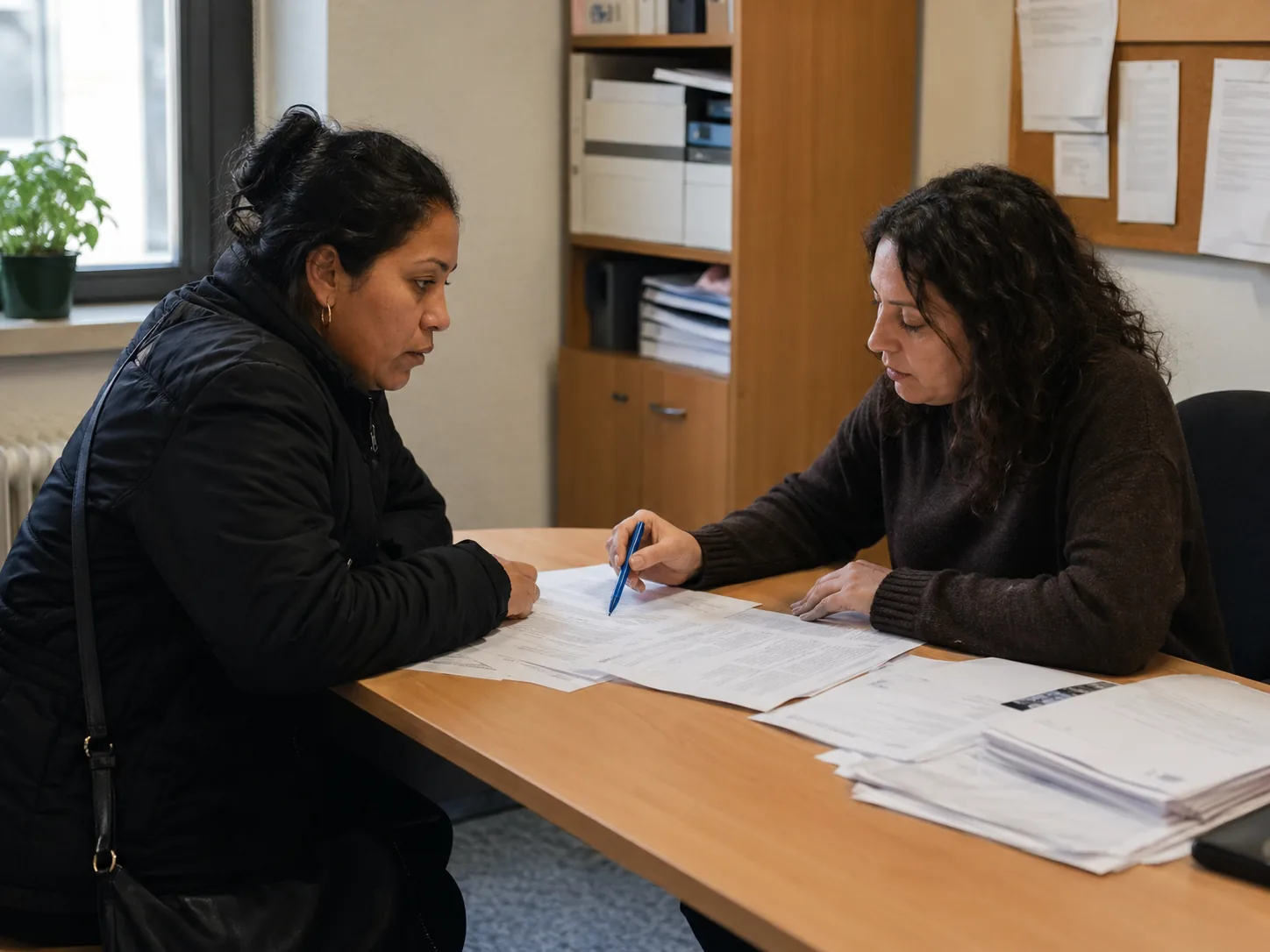
That clarification helped, but it opened another practical issue. In several territories, obtaining the certificate started to look like a bottleneck. Not because the rule says so dramatically, but because turning a difficult social situation into a document the Administration accepts takes time, coordination and judgment.
If that is your route, read vulnerability certificate for Spain regularization 2026 before you file.
The in-person network now has a concrete shape
In-person filing began on April 20. One day later the Ministry gave the operational map: 436 offices in total.
The official split is:
- 371 post offices
- 60 Social Security offices
- 5 immigration offices
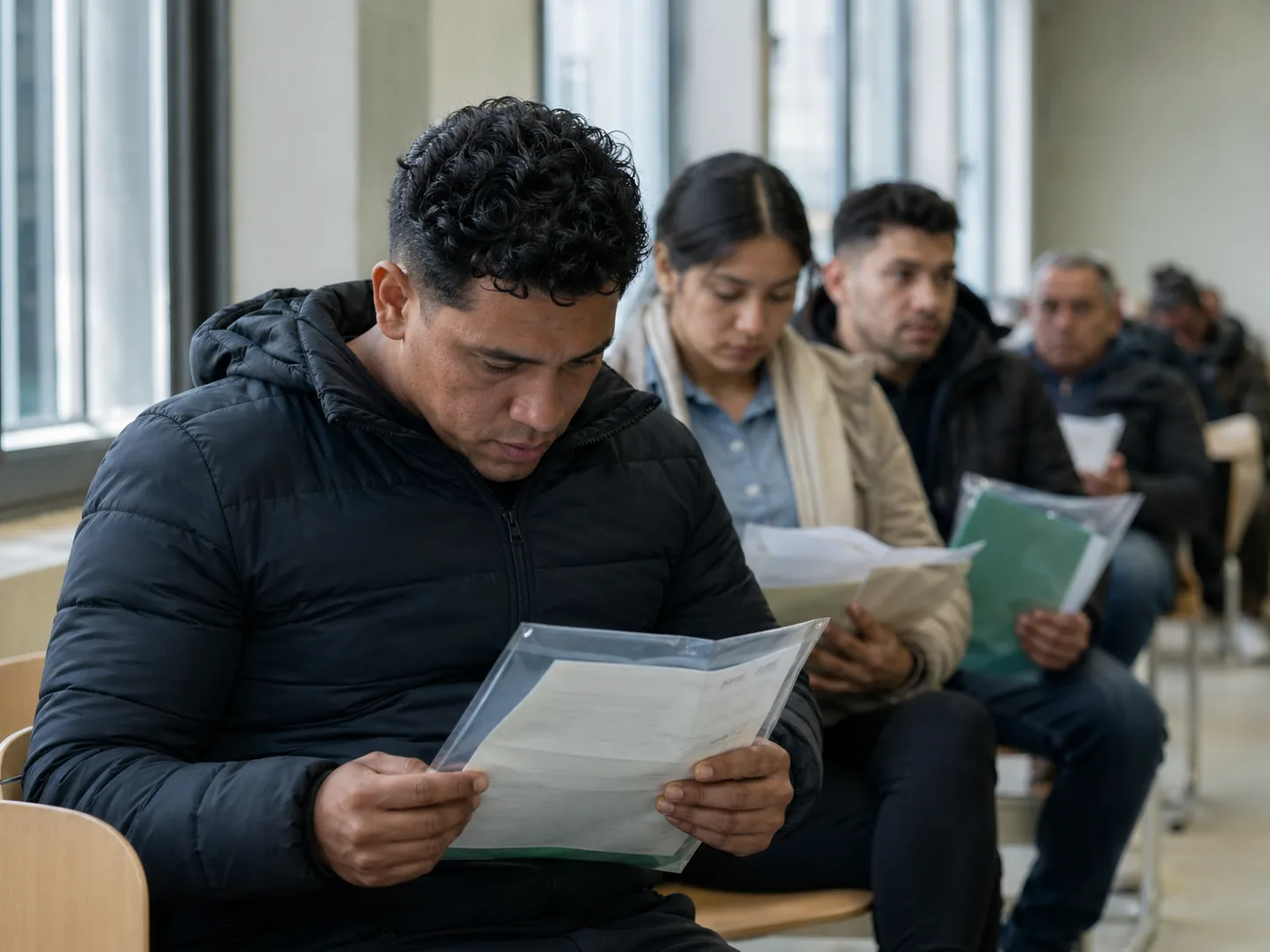
Appointments are mandatory. That sounds simple, but in practice it has already meant queues, confusion, and wasted trips by people who arrived looking for orientation rather than formal filing.
For law firms and advisers, this stage adds a new strategic layer. It is no longer only about knowing which document works. It also matters where you file and how fast you can move.
The first week confirmed the pressure
On April 24 the Ministry said there were already more than 130,000 applications combining online and in-person filing.
That changes the scale of the problem.
The regularization is no longer testing whether people care. It already proved that they do. The question now is how that volume spreads across offices, platforms, social services and case-processing units.
That has several practical consequences:
- filing without gaps matters even more
- a correction request may cost more time than people first assumed
- the finer documentary work becomes even more valuable
If you are still organizing your folder, start with documents needed for Spain regularization 2026.
Politics did not disappear. It moved into operations
After the decree was published, the political argument did not disappear. It moved.
Now you can see it in:
- court challenges
- accusations of institutional obstruction
- territorial differences
- and pressure to coordinate with municipalities and provinces
That is why the Ministry announced a working line with FEMP. The problem is no longer explaining the measure. The problem is making it function evenly across the country.
What changes for you today
If your profile fits this route, the main change is not that the law took a dramatic turn after April 15. The main change is that we now know which parts are weighing most in real life.
Today it makes sense to look much more closely at three things:
- whether your filing basis is actually clear
- whether your criminal-record block is really underway
- whether your folder is built for a system that is already under pressure
That means older blog posts are still useful, but they now need to be read through this operational lens. If you want the legal baseline, start with final 2026 decree: the key changes explained. If you are comparing routes, follow with 2026 regularization vs arraigo.
The real update
The real update is this: the regularization is no longer being discussed only inside the BOE. It is now being tested in offices, appointments, certificates and files arriving by the thousands.
That is where time is now won or lost.
Sources
Quick questions
Is the regularization still active?
Yes. As of April 26, 2026, the process remains active both online and through in-person filing.
Did the Supreme Court stop the process?
No. On April 16 it rejected the urgent suspension request filed against the decree, so the process continued.
What has been the biggest practical issue so far?
Pressure on appointments, offices and vulnerability certificates, plus the very fast volume of applications in the first week.
Keep reading
The same mistakes keep repeating.
Vulnerability certificate for Spain regularization 2026
Who needs the vulnerability certificate for Spain regularization 2026, who does not, who can issue it, and why it is becoming a bottleneck.
- Regularization 2026
- Vulnerability
- Documents

Documents needed for Spain regularization 2026
A practical checklist of documents for Spain regularization 2026: identity, cutoff-date proof, continuity, criminal records and vulnerability proof when needed.
- Regularization 2026
- Documents
- Filing strategy

Final 2026 decree: the key changes explained
A clear summary of the real changes in Spain regularization 2026: legal structure, criminal records, vulnerability proof and what to prepare now.
- Regularization 2026
- Decree 2026
- Immigration